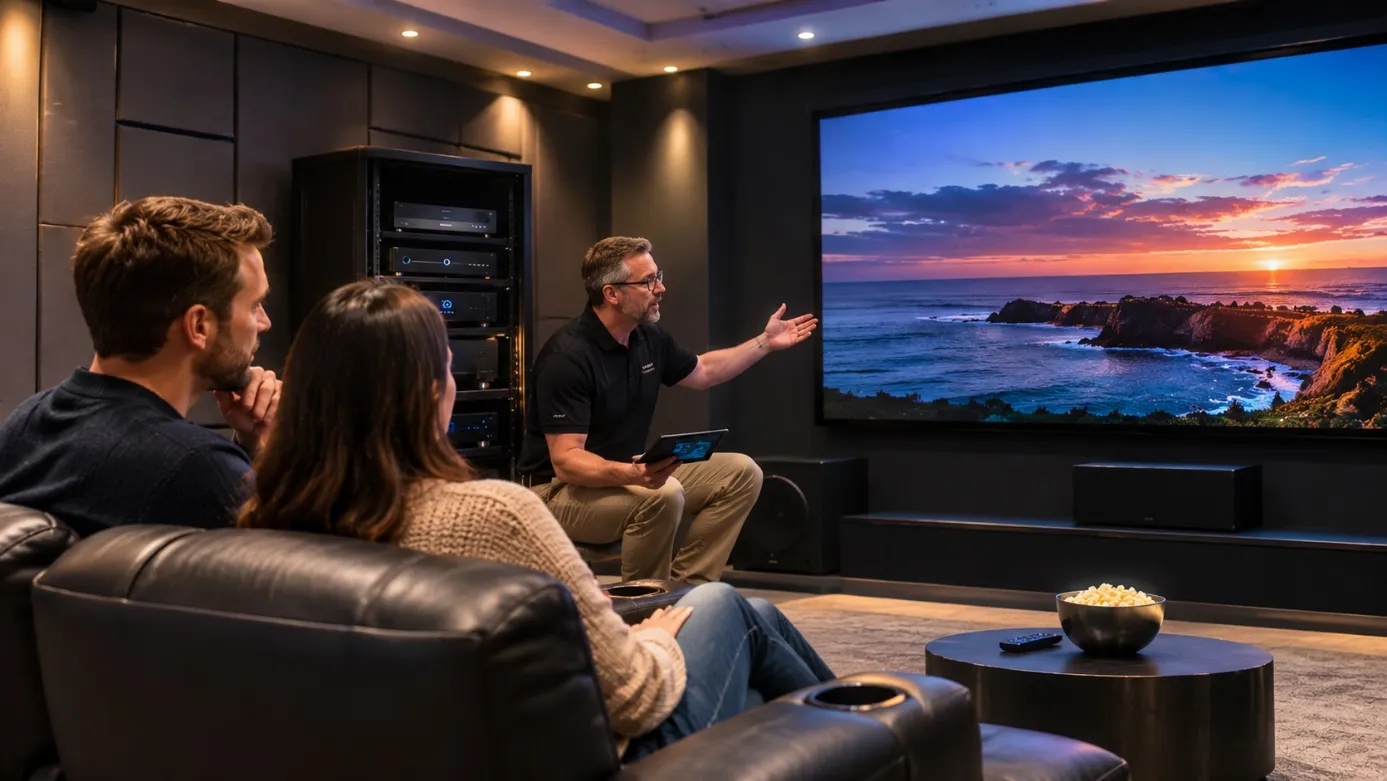
A home theater demonstration can make expensive equipment look impressive within minutes. Showrooms often use carefully selected scenes, controlled lighting, and calibrated sound to highlight a system’s strengths. Those conditions may differ from a family’s actual living room. Instead of judging a purchase by a dramatic explosion or an exceptionally bright image, homeowners should assess whether the proposed setup delivers consistent quality and remains comfortable to operate. Practical tests can reveal more than specifications.
Bring Familiar Scenes, Not Just Expectations
A demonstration is easier to evaluate when the audience recognizes the material. Familiar dialogue, dark sequences, and fast-moving scenes help viewers notice whether picture and sound details remain clear. Ask which source and settings are being used.
When evaluating a Kaleidescape movie player, buyers can request a demonstration using a title they know well, provided it is available on the system. Comparing playback sources only makes sense when the display, volume, and viewing conditions are reasonably consistent. Otherwise, the setup may explain differences.
Look Beyond Brightness and Screen Size
A striking image is not necessarily an accurate one. Excessive sharpening can make textures look artificial, while exaggerated color settings may produce an immediately appealing but unnatural result. Watch for shadow detail, gradual color transitions, and motion that looks comfortable rather than distracting.
Ask to see a quiet nighttime scene as well as bright outdoor footage. Observe from your likely seating position. A giant screen may feel exciting in a showroom, yet viewing distance, window placement, and surrounding furniture will affect whether that size works in your own room.
Ask How the Proposed System Fits Your Property
An impressive showroom usually benefits from deliberate speaker positioning and controlled acoustics. An ordinary family room may have open doorways, hard floors, large windows, or shared seating areas. These differences change results even with identical equipment.
Homeowners considering home theater installation NJ services should ask for an assessment of their specific space before accepting a final equipment recommendation. The discussion should address seating distance, electrical access, cable routing, ventilation, and the intended uses of the room. The proposal should explain necessary work.
Listen Carefully When the Action Stops
Explosions and deep bass are easy to notice; natural voices are harder to judge. Include scenes with soft dialogue, background music, and changes in volume. Speech should remain understandable without making action scenes painfully loud. Listen for differences as you move between likely seating positions.
Also ask whether the demonstrated sound comes from the equipment you are actually considering. A premium processor or carefully treated room can influence the experience independently of the speakers. Understand the full audio chain before crediting one component.
Operate the Controls Yourself
A salesperson may move between sources effortlessly because they know every button and menu. That does not prove guests will find it convenient. Ask to start a movie, pause it, change the volume, and return to another source yourself.
If automation is included, test a normal activity rather than a complicated demonstration scene. Confirm that basic functions remain accessible when a programmed sequence is unavailable. A usable system should save effort during ordinary evenings, not require someone to memorize a detailed operating procedure.
Compare the Whole Project Cost
The equipment price is only part of a completed theater. Mounting hardware, electrical work, cable routes, equipment cabinetry, calibration, programming, and room treatments may be separate expenses. Ask for an itemized proposal that distinguishes required work from optional upgrades.
Confirm which equipment models will be supplied, who handles installation tasks, and what happens if the room presents unexpected constraints. Written details simplify comparisons and prevent disputes. Spending more is reasonable only when the additional features solve needs that matter to the household.
Evaluate Support and Future Flexibility
Before committing, ask how the provider handles troubleshooting, software updates, and warranty coordination. Also check whether existing speakers or displays can stay in service. Reusing compatible components may leave more budget for improvements that genuinely affect the experience.
A sensible demonstration should end with a clear understanding of tradeoffs, not pressure to purchase immediately. Take notes about what sounded or looked better, what remained uncertain, and which features seemed unnecessary. Discuss those observations with household members.
Conclusion
A productive home theater demonstration is a practical evaluation, not a performance staged to impress. Familiar content, honest comparisons, hands-on controls, and a realistic installation proposal help reveal what will work after the showroom visit. Epic Systems offers equipment and home theater design services, but the buyer’s room and habits should ultimately guide the decision. The right system is one that delivers dependable enjoyment on an ordinary evening, without requiring a specialist to operate it.